
Building a Better Future for Sustainable Seafood
At Nor’Easter Oyster Co., we’re more than just an aquaculture company—we’re a community-driven initiative rooted in Maine’s rich aquaculture heritage.
We’re partnering with our fellow Maine sea farmers to transform overlooked, “cosmetically unique” oysters into premium, value-added products that tell the story of Maine’s waters.
Our mission is simple: to create a seafood industry that works for everyone—farmers, seafood lovers, and the environment.
Our Story
Maine is home to over 150 individually-owned oyster farms. These farms produce some of the best oysters in the world, but many of these farms face a common challenge—what to do with oysters that are too large, clustered, or too cosmetically-unique for the raw bar market? These raw bar rejects, though perfectly delicious, often go unused, taking up valuable farm space or merely, sitting on the seafloor, unused.
At Nor’Easter Oyster Co., we saw an opportunity to turn this challenge into a solution. By creating a market for these excess oysters, we’re helping farmers free up space for new oysters, grow their businesses confidently, generate additional revenue, and focus on what they do best: producing high-quality, sustainable seafood.
Turning the Tide for
Excess Oysters

At Nor’Easter Oyster Co., we believe every oyster has a story—and a purpose. That’s why we partner with sea farmers to purchase 𝚎𝚡𝚌𝚎𝚜𝚜 oysters that have grown too large or are “cosmetically unique,” and thus not suitable to be sold on Maine’s competitive half shell market to raw bars + restaurants.
Why are some oysters enormous?

In Maine, most oysters sold are between 18-24 months old. Those jumbos are the elders of the bunch, meaning they’ve been growing far longer. Some farmers intentionally nurture these giants for specific markets, while others end up with jumbos due to changing market demands. What were once market-sized oysters have stayed in the water a longer, waiting for their moment to be sold. The problem: would you order a dozen 6”+ raw jumbos at a raw bar? Probably not.
What about those gnarly clusters of oyters?

Sometimes, when oysters aren’t handled regularly or moved to roomier cages as they grow, their shells can fuse together, forming “doubles” or clusters. Oysters can even become clustered when they are mere larvae growing in the hatchery. They’re still just as delicious, but their quirky looks don’t meet the standards of a restaurant raw bar.
What were farmers doing with excess oysters before Nor’Easter?
The short answer—nothing. As these unique oysters continue to grow on a farm, they take up precious real estate in a farm’s floating cage system. Farmers are oftentimes forced to drop these oysters to the bottom of the sea floor to make room for their new yearly class of baby oysters. These excess oysters continue to grow, unfettered, at the bottom of the sea floor, and are lost revenue opportunities.
Rather than let these oysters go to waste, we give them a second chance by incorporating them into our products. It’s a way to reduce waste, create new revenue streams for hardworking farmers, and celebrate the beauty of Maine’s seafood.
Meet Our Team
we’re a small but mighty team with deep roots in the seafood industry

-
Co-OwnerSean Corcoran has worked as a commercial oyster farmer for over 8 years. Sean grew up in Easton, Maryland, and started his career on the water at Orchard Point Oyster Company, an oyster farm in the Upper Chesapeake Bay. Sean's experience on the Chesapeake instilled in him a passion for sustainable aquaculture, and an excitement for working in challenging environments. During his time at Orchard Point, Sean worked closely with company owners to realize their dual goals of expanding the farm's acreage, while maintaining production of a premium product. He also gained invaluable knowledge growing oysters for both the half shell and shucked markets, and working closely with seafood distributors on sales of the farm's multiple product lines.
Since 2021, Sean has served as the farm manager of Johns River Oyster Company in South Bristol, Maine. He has been able to adapt the skills he learned managing a large-volume aquaculture operation in Maryland to Maine's renowned Damariscotta River. Inspired by the oyster product diversity and shucking market in Maryland, and Maine's renowned reputation for pristine waters and premier seafood, Sean sought out to create Nor'Easter Oyster Company. Sean has brought his knowledge of the Mid-Atlantic's shucked and value-added oyster market as well as his invaluable industry connections to Nor'Easter Oyster Company.

-
Co-Owner
Jacqueline Clarke has over seventeen years of seafood industry experience. When she was just 14 years-old, she got her first job working at a local seafood restaurant. She quickly became enamored with learning all about the world's seafood—including where it came from, how it was prepared, and who was enjoying it. Jacqueline has worked for several seafood companies and distributors in both New England and the Midwest and has experience in the sales, procurement, and value-added spaces. She has worked with over 100 different aquaculture operations and seafood producers both domestically and internationally. Her experiences have allowed her to visualize gaps in Maine's own aquaculture and seafood industries, and opine as to ways to adapt aquaculture farming practices and seafood sales strategies to Maine's existing businesses. Jacqueline has earned her certification in HACCP.
Hot Off the Press
thank you to those that our sharing our story!

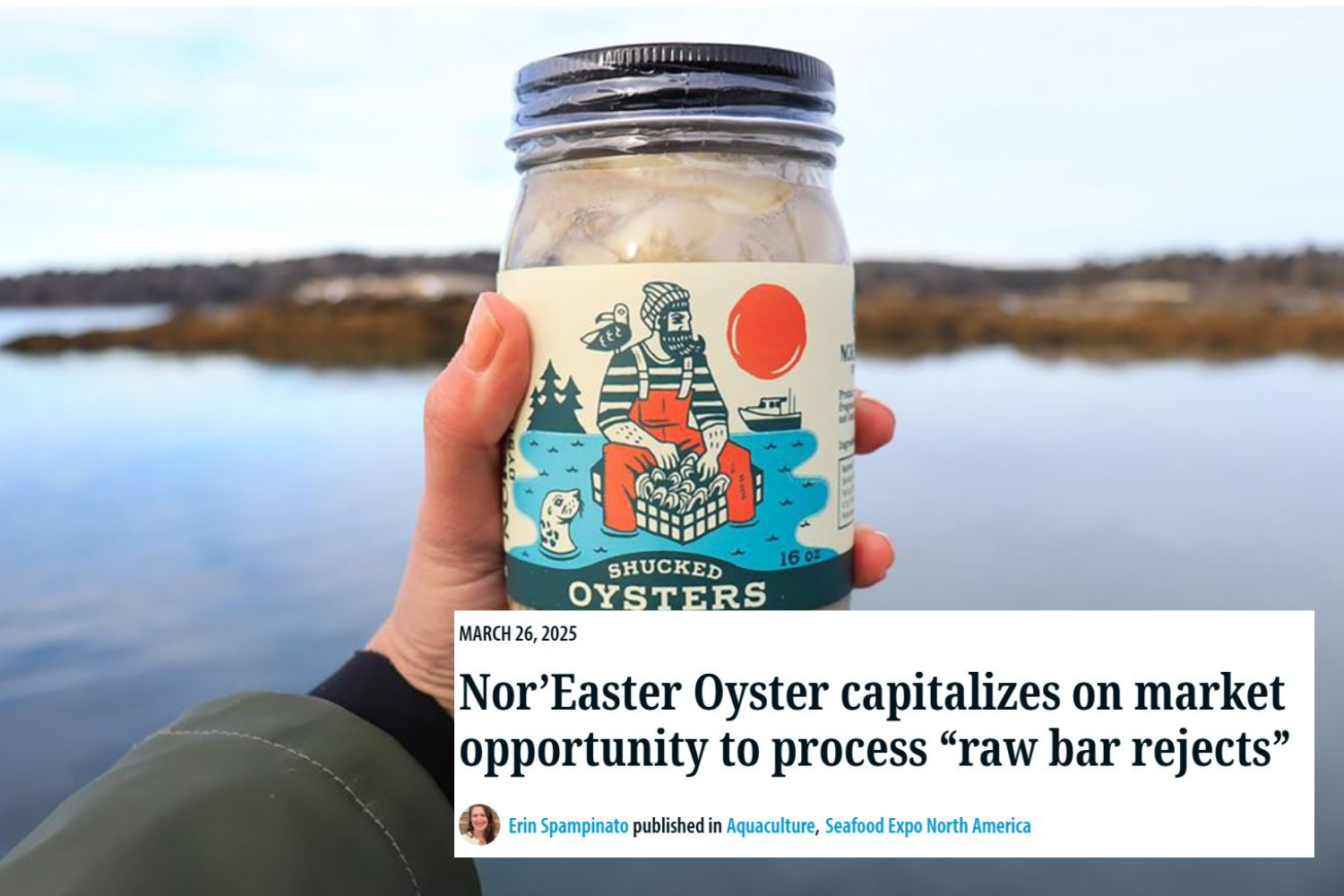


Nor'Easter Oyster Co is a woman-owned aquaculture business, and Southern Maine’s first shellfish processing facility. Our mission is to create new revenue opportunities for local Maine sea farmers by purchasing excess oysters, that would otherwise go unused, and transforming them into premium seafood products.